Good Luck Getting to Seoul
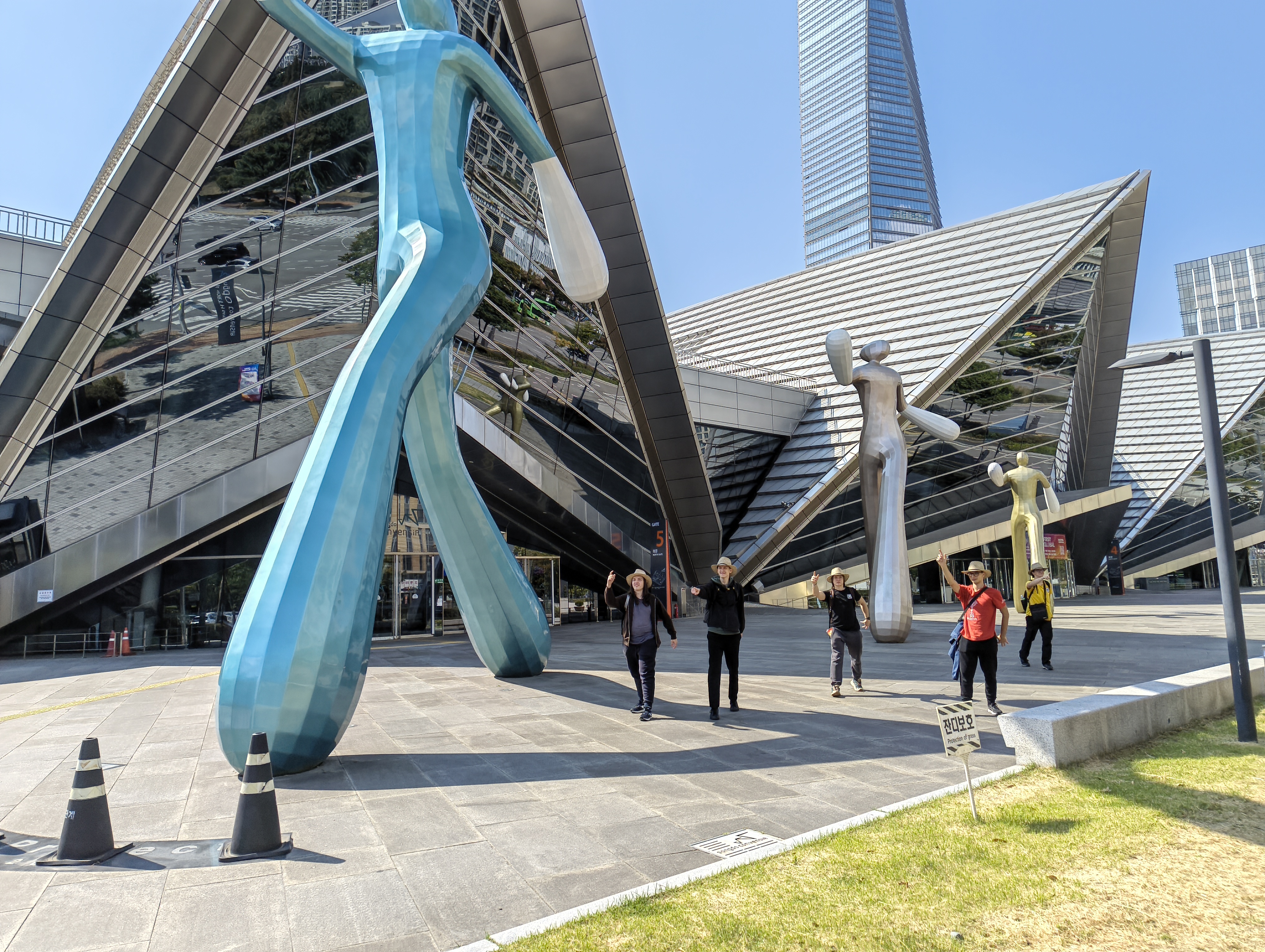
Landing with LOT moved our clocks seven hours forward. At the airport, we happily showed our documents and faces and left our fingerprints to enter the country. We found our suitcases quickly, one of them even sporting a special yellow lock, which means it has to be opened and the tools inside it explained.
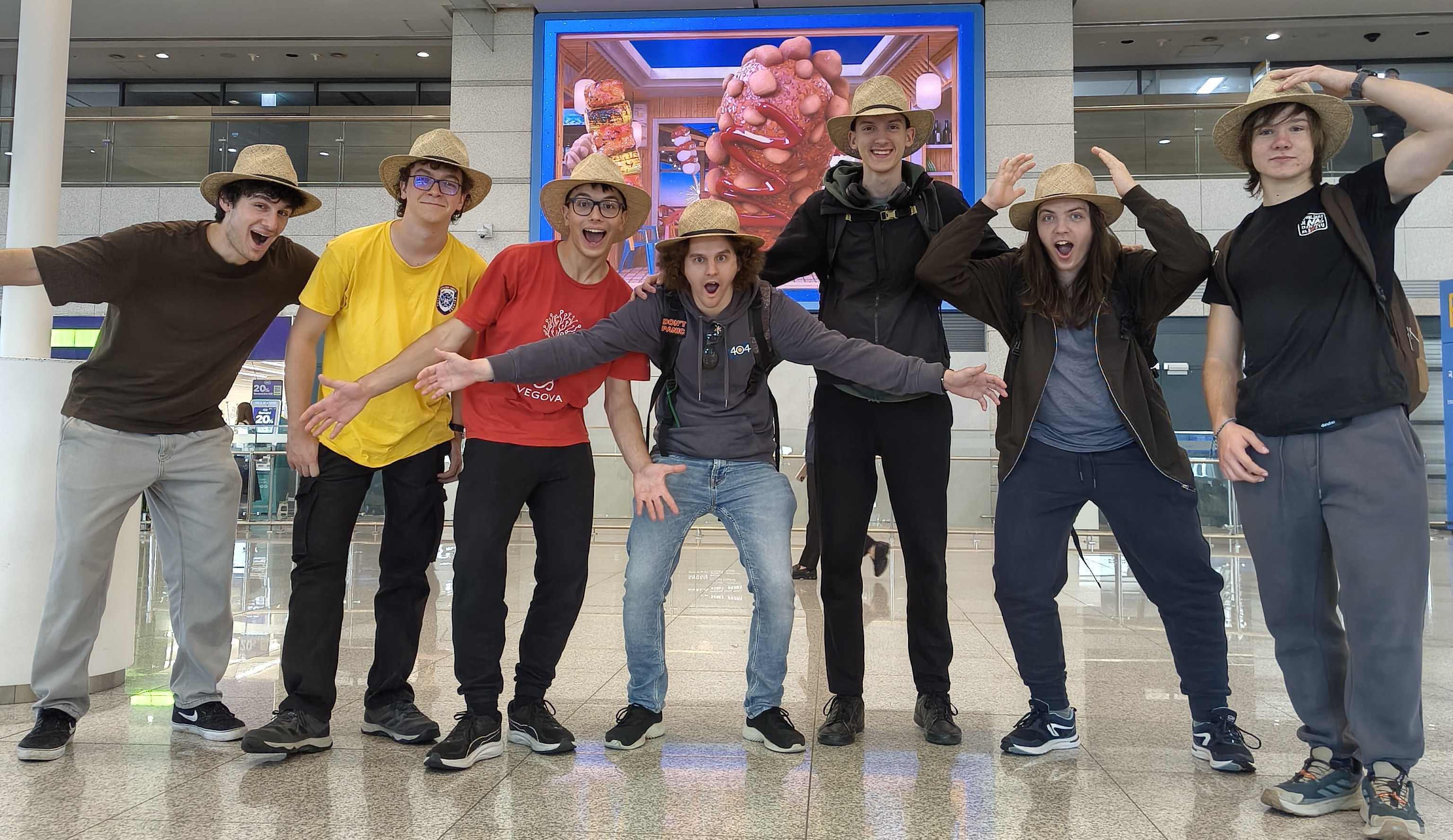
Instead of one of the suitcases, we simply received a note in a plastic crate asking the owner to report to the returns window. Our first impressions were rather odd, as the people there (the staff!) had no idea where this miraculous window was supposed to be. The solution lay in a huge screen through which we reached an operator, who knew to send us to the LOT window. There, a filled-in form was followed by a polite thank-you and the assurance that within 24 hours the suitcase would already be very close.
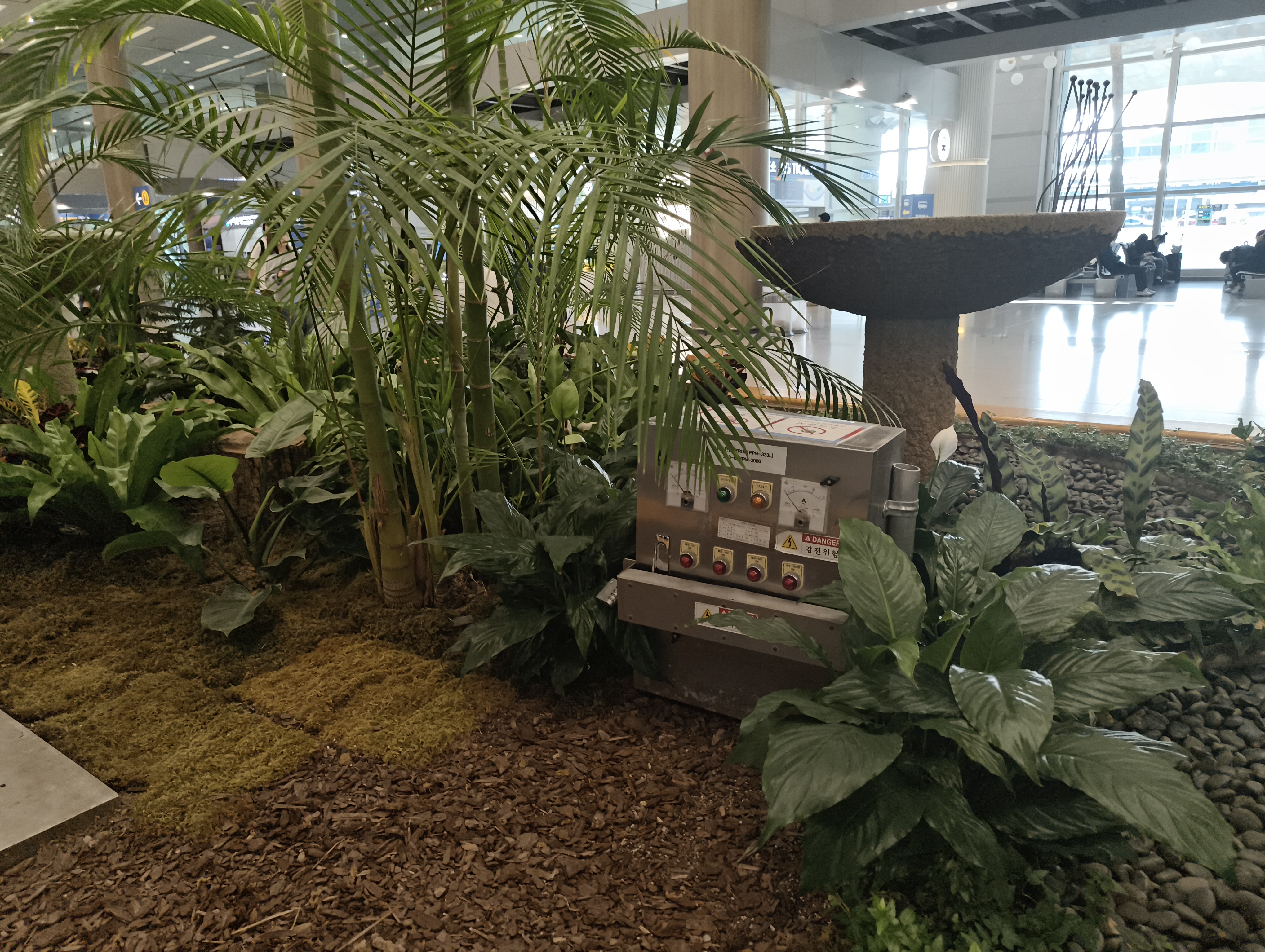
A walk through the airport showed us little islands of plants, a neatly kept space, unfamiliar shops and more besides. After some more searching, we managed to find the welcome desk for robotics Olympians such as ourselves. We waited a little longer, crossed at a traffic light with huge numbers and kerbs in matching colours, and boarded a coach with motorised leg rests. Pleasantly surprised, we rode to the Oakwood Premier hotel in Incheon, the city closest to the airport.
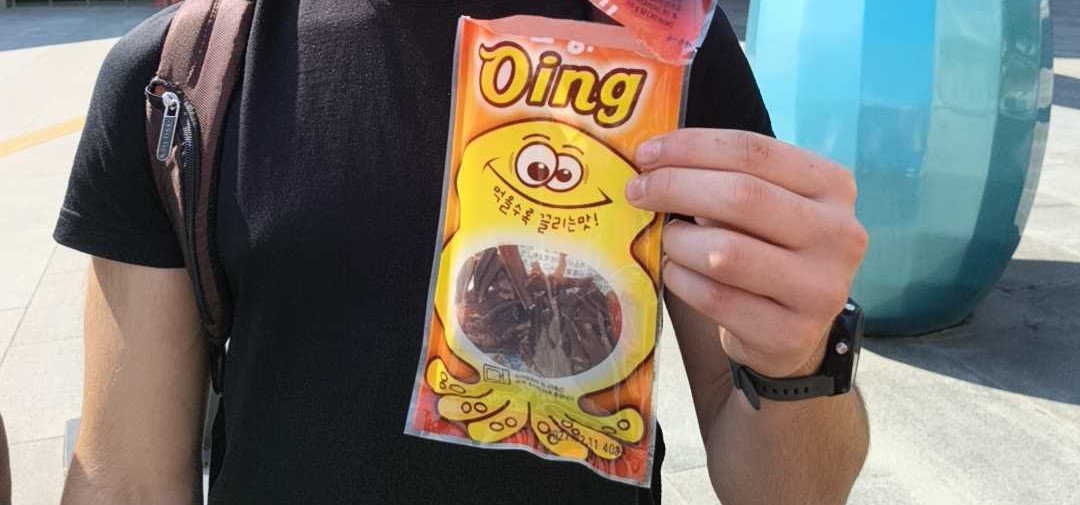
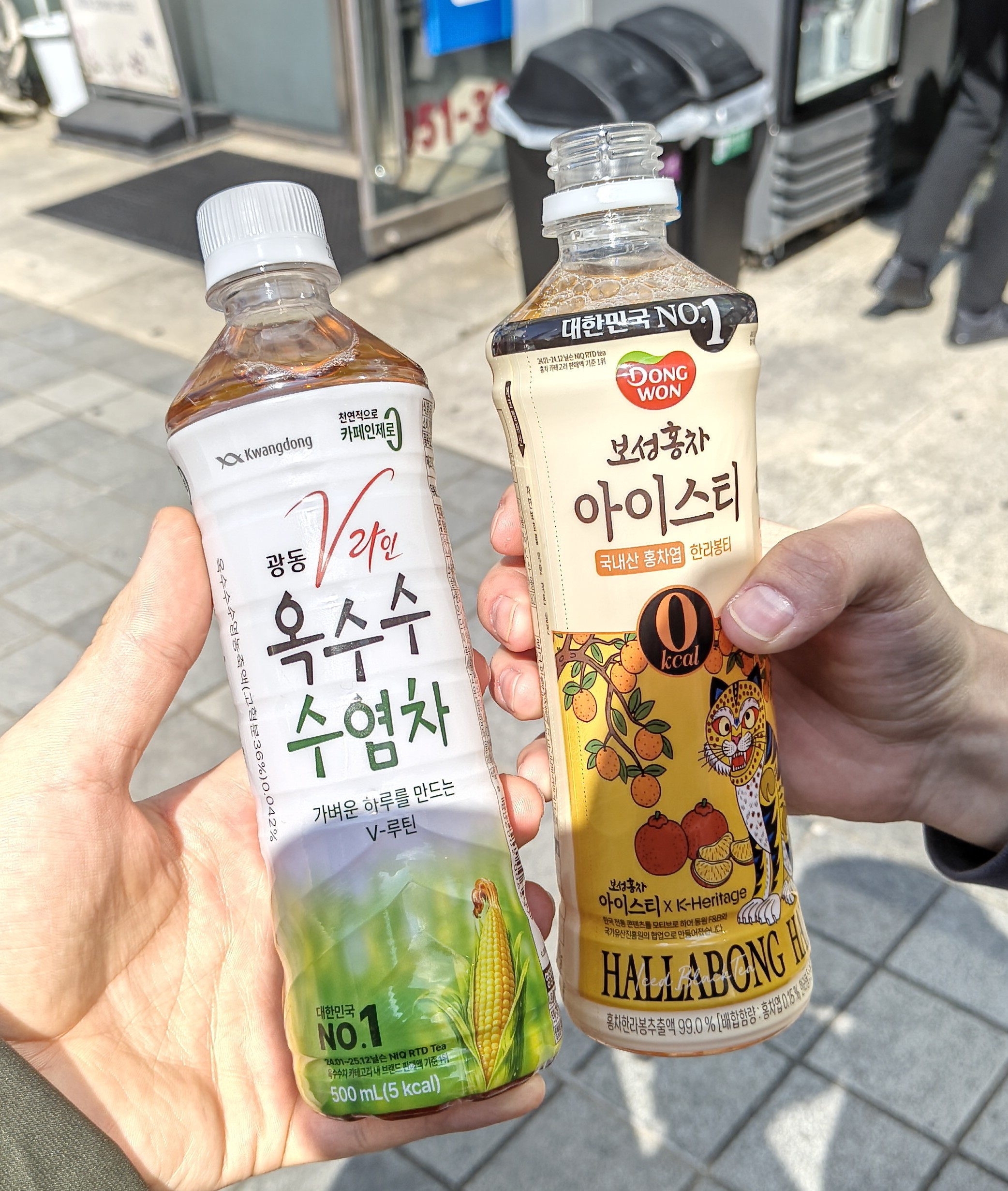
On the way, we saw huge bridges, a clear dominance of Hyundai and Kia cars, great tower blocks and cargo ships sailing into port. The coach dropped us off in front of a 305-metre-tall building of 65 storeys. We left our luggage, since there were still three hours until check-in, and set out to explore the area around the hotel. Our first stop was the shops across the road, where we found a selection of restaurants and the convenience store Nice to CU, where we went for juices and snacks. We quickly realised that trying new things here would be quite the adventure: neither the corn juice nor the grain juice deserved any praise, and the dried octopus pieces were rather a chewing challenge. The juices made from fruits we know, however, did not disappoint. We were surprised that when paying by card, one has to leave a signature on a small graphics tablet.
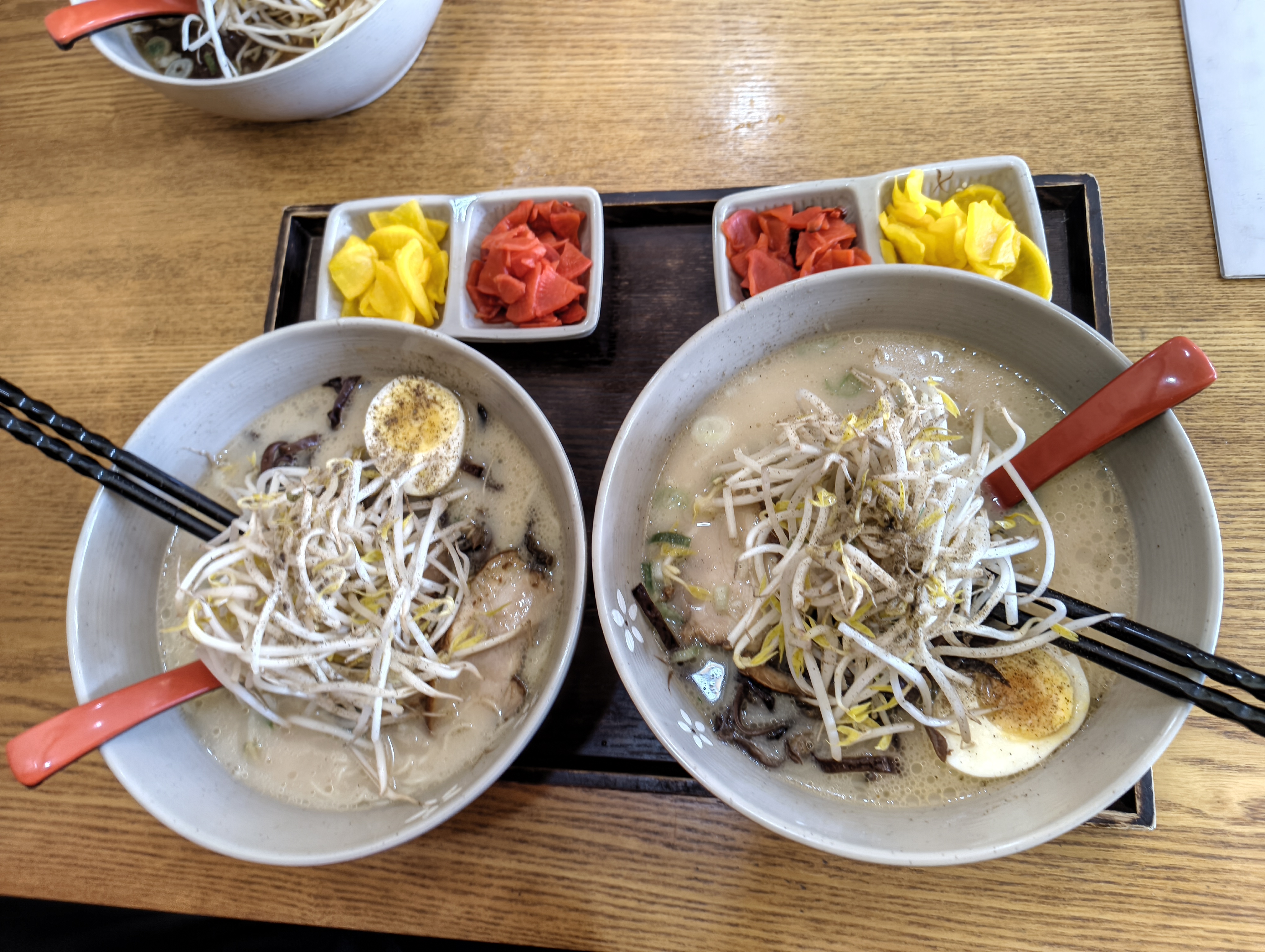
Afterwards, we met up with Jaka, a former team member and mentor who once again came to help run the event as a volunteer this year. We made our way to the Hakoya ramen restaurant, where we ran into the mentors of the Croatian team. We were given a sound piece of advice: if the gentleman says it is only a little spicy, do not believe him. When the huge bowls landed in front of us, together with side dishes of a special kind of ginger, we did not speak for a few minutes and simply savoured the flavours.
Before leaving, we asked the gentleman whether he had any advice on how to get to Seoul, which is actually smaller than Incheon by area but is the capital and the most populous city. He told us exactly which bus to take, whilst Jaka explained how paying for bus and metro journeys works. So we went to get an EZL transport card, which Android phone owners must use, whereas Apple enthusiasts are a little more privileged, as all they need is the T-Money app.
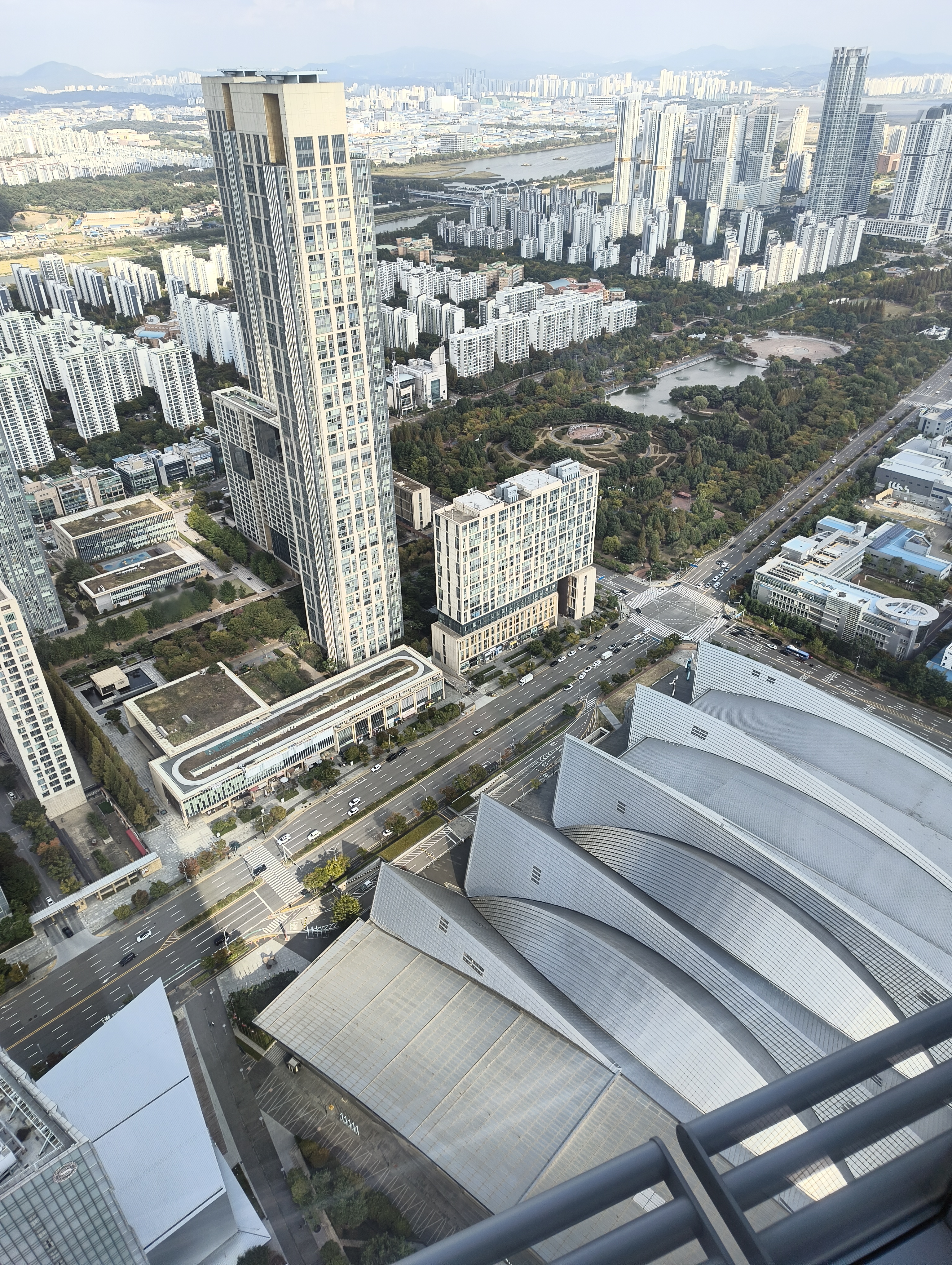
At reception, we received the key cards for two rooms in the five-star hotel, with the students lodged on the 48th floor and the two mentors at a suitable distance on the 55th.
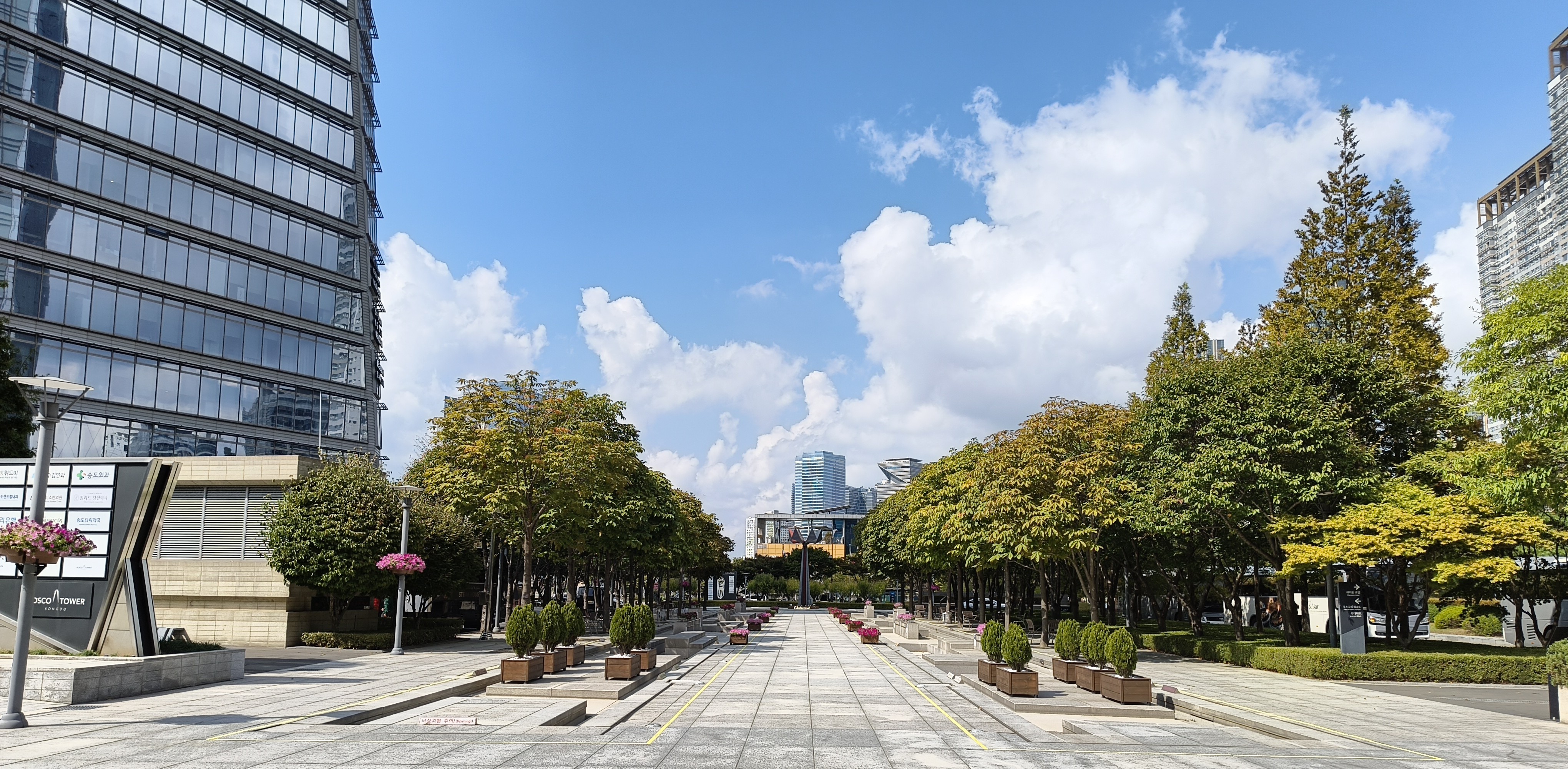
As today, Monday, was our only free day, we headed to the Incheon the Sharp First World bus stop, boarded bus M6450 and set off for Seoul’s Gangnam district. The communication difficulties did not stop at the alphabet: explaining that we wished to pay for several people with one card kept the driver busy for a few stops. A good hour’s journey brought us to a city of 10 million people.
We continued on foot to an electronics market, and by the time we arrived, we already had a feel for Seoul’s streets, full of restaurants and all manner of shops. The 11-storey building full of stalls mostly offered figures of animated characters, some old audio electronics, video games and the like. We were not browsing the stalls alone, as plenty of teenagers were there with us, hoping to find a collector’s item.
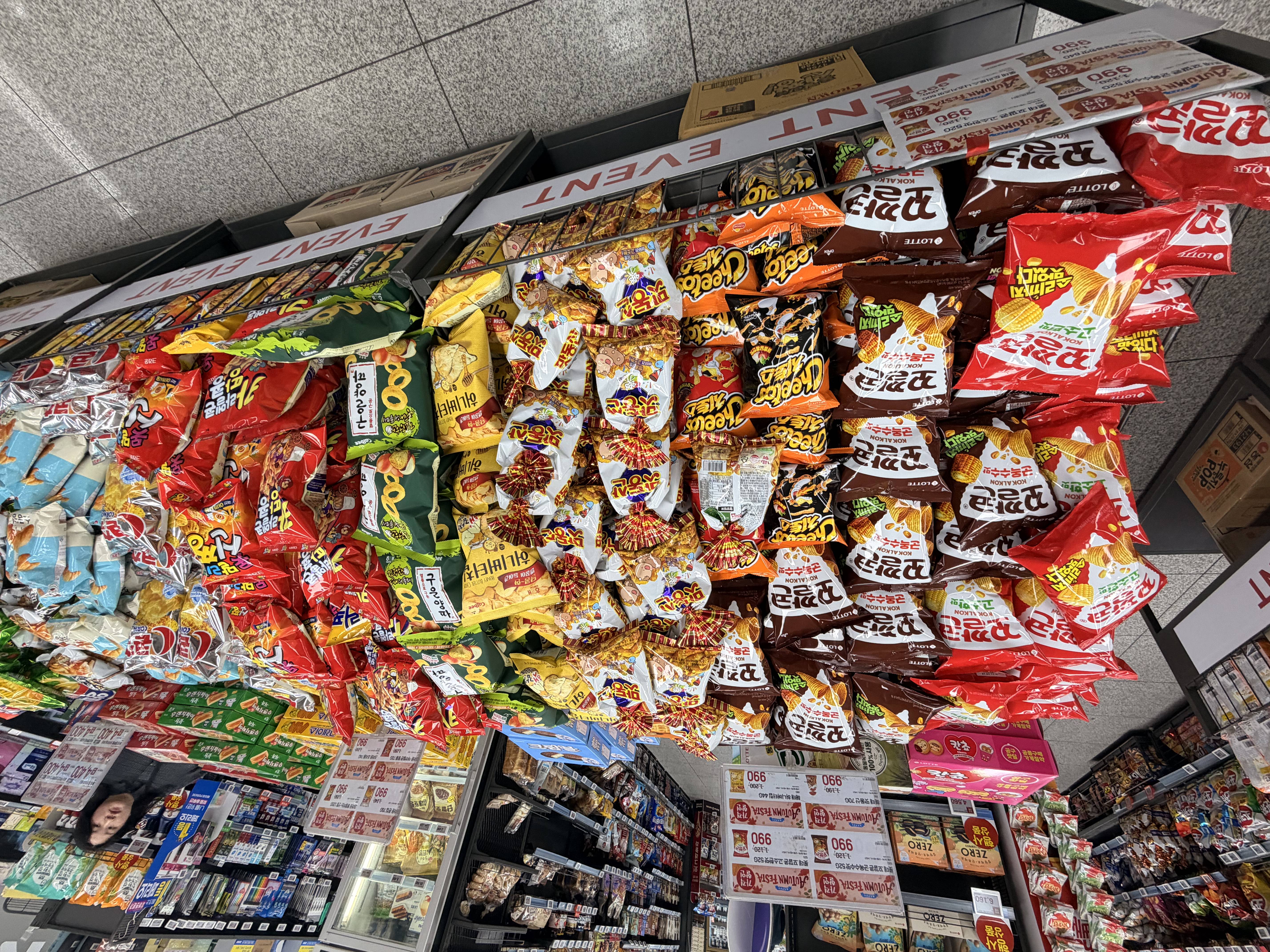
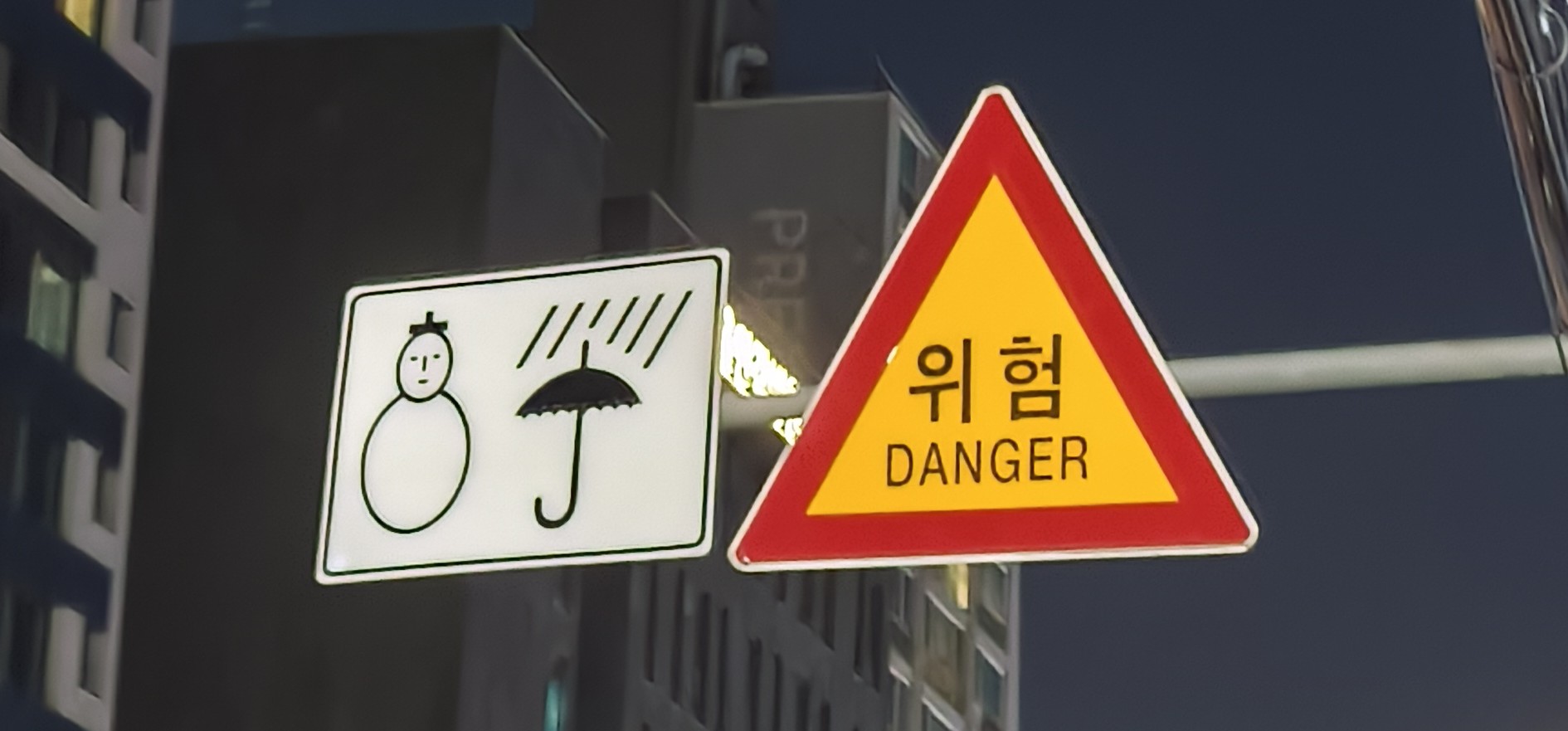
We concluded our wanderings at the Lotte shop on the ground floor, where we picked up snacks and drinks and headed for our next destination, the statue dedicated to the Gangnam Style dance. We soon came to appreciate the size of Slovenia and its towns, as what looked like a short walk turned out to be rather longer than we would have liked. Apparently, Google Maps has not been in South Korea for very long, so it cannot estimate walking times between two points. And so we walked a good 10 km, taking in all the unusual signs, restaurants and rubbish bins along the way.
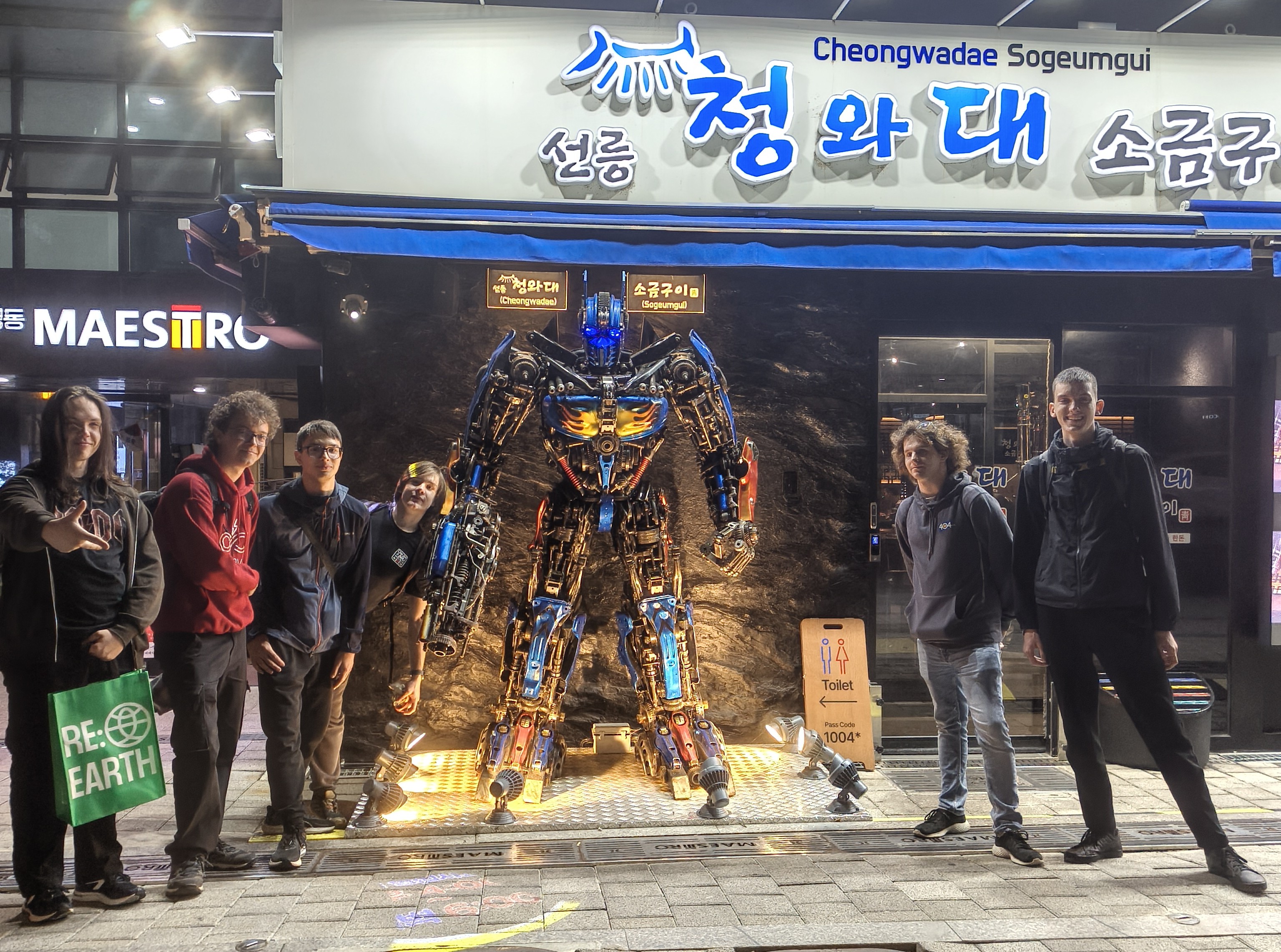
We discovered that Koreans are mad about tennis and golf, as they have dedicated shops, especially for the latter (e.g. Nike Golf). Another thing that surprised us on our walk was the number of high-end cars parked in front of random restaurants and pubs on random streets.
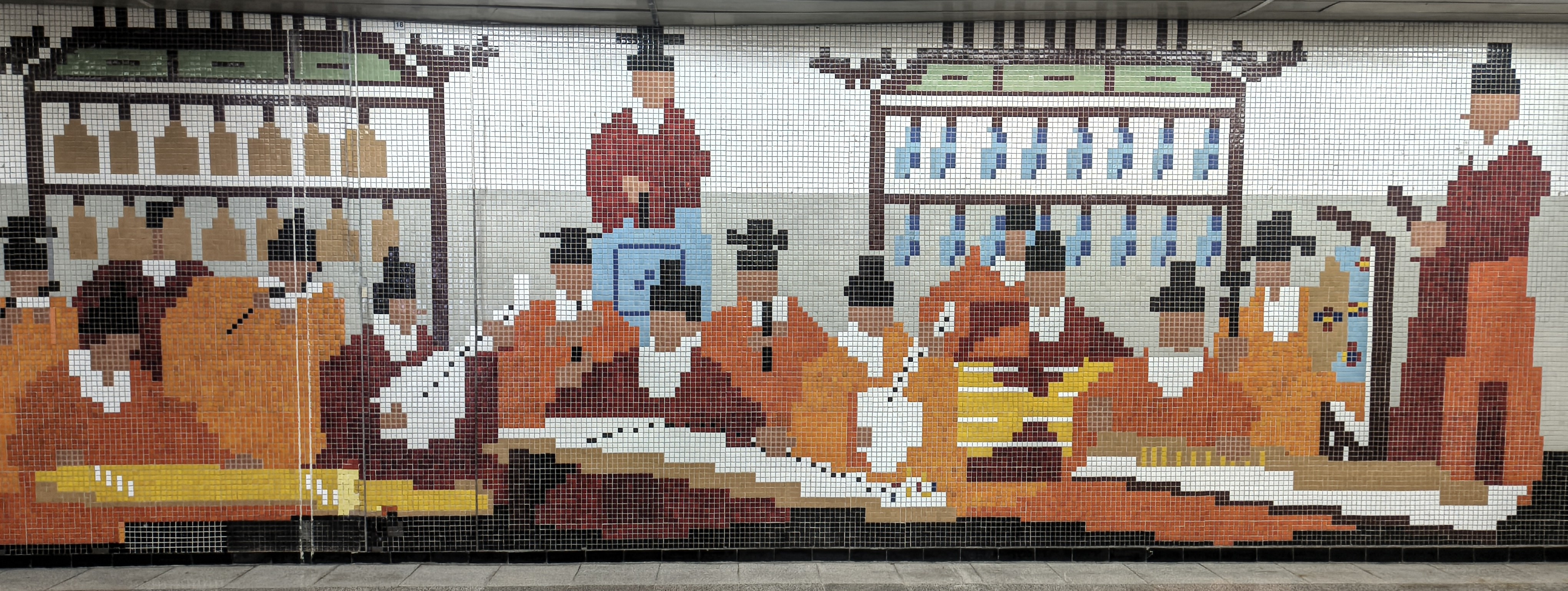
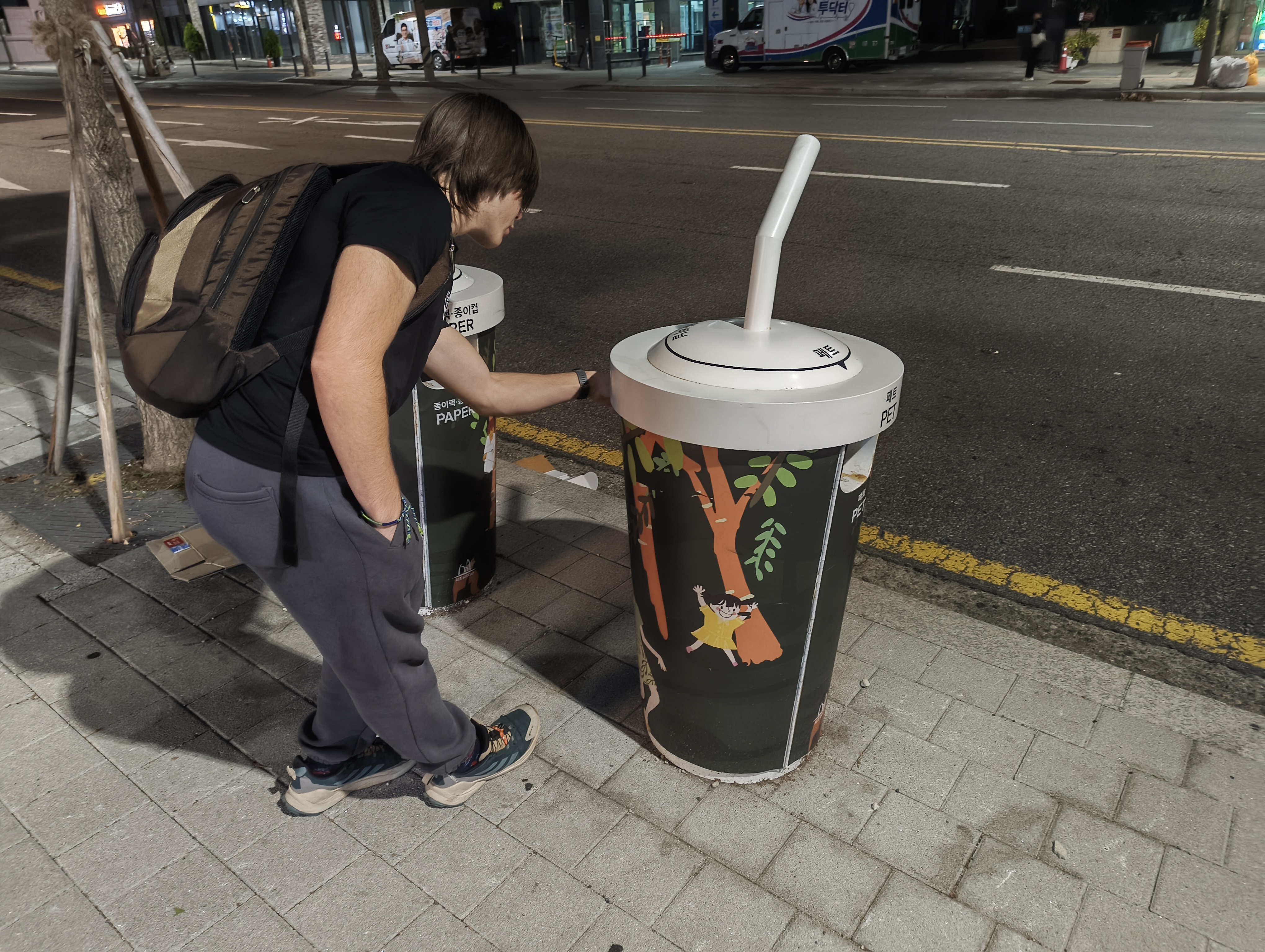
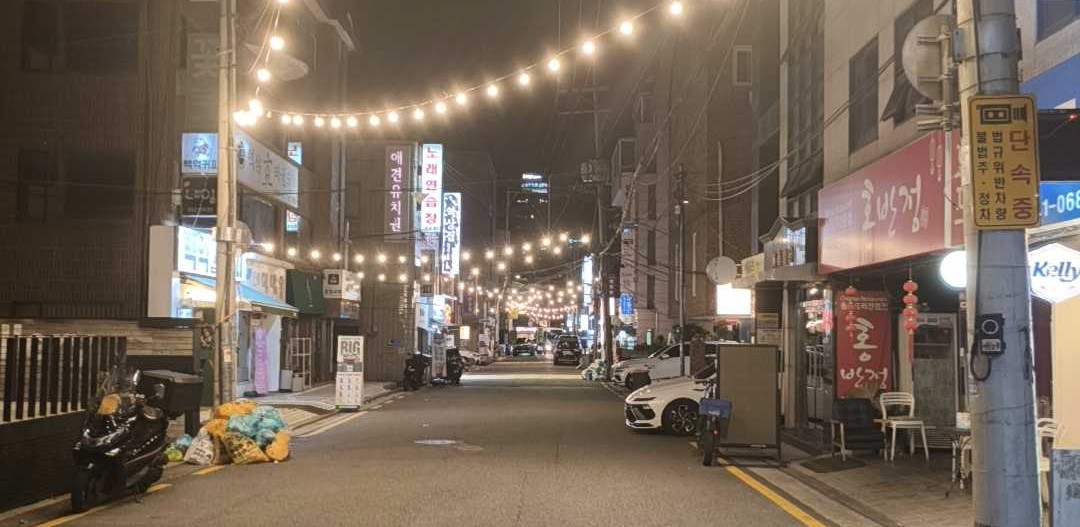
We finally made it across every last pedestrian crossing and, on the way to the COEX shopping centre, enjoyed wide pavements with scarcely anyone on them. The hardest part was finding the entrance to the shopping centre, so we ended up going in through the underpass of the hotel next door. Inside, we came across all sorts of shops and restaurants, but our aim was to see a special space that looks like a library.
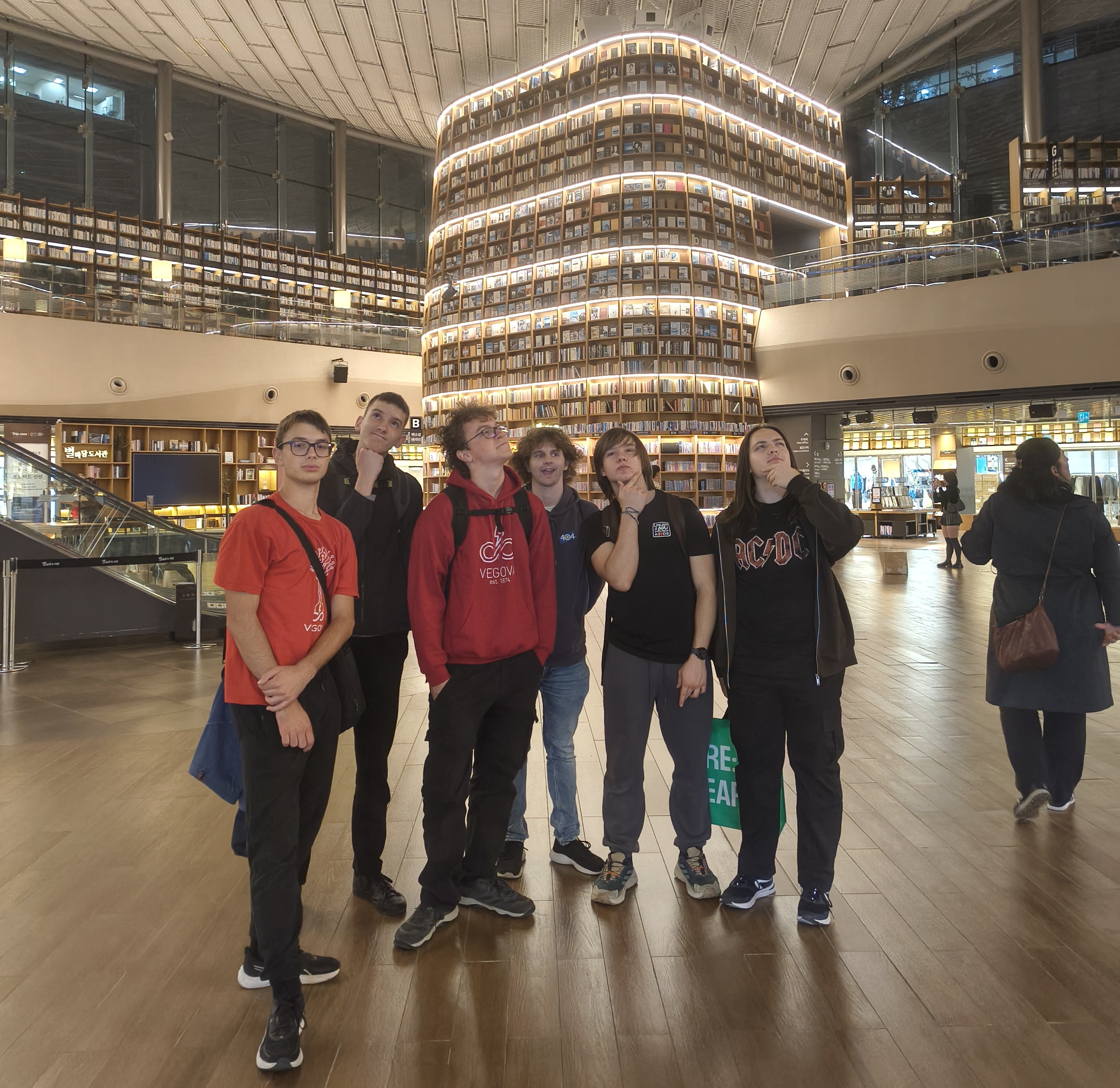
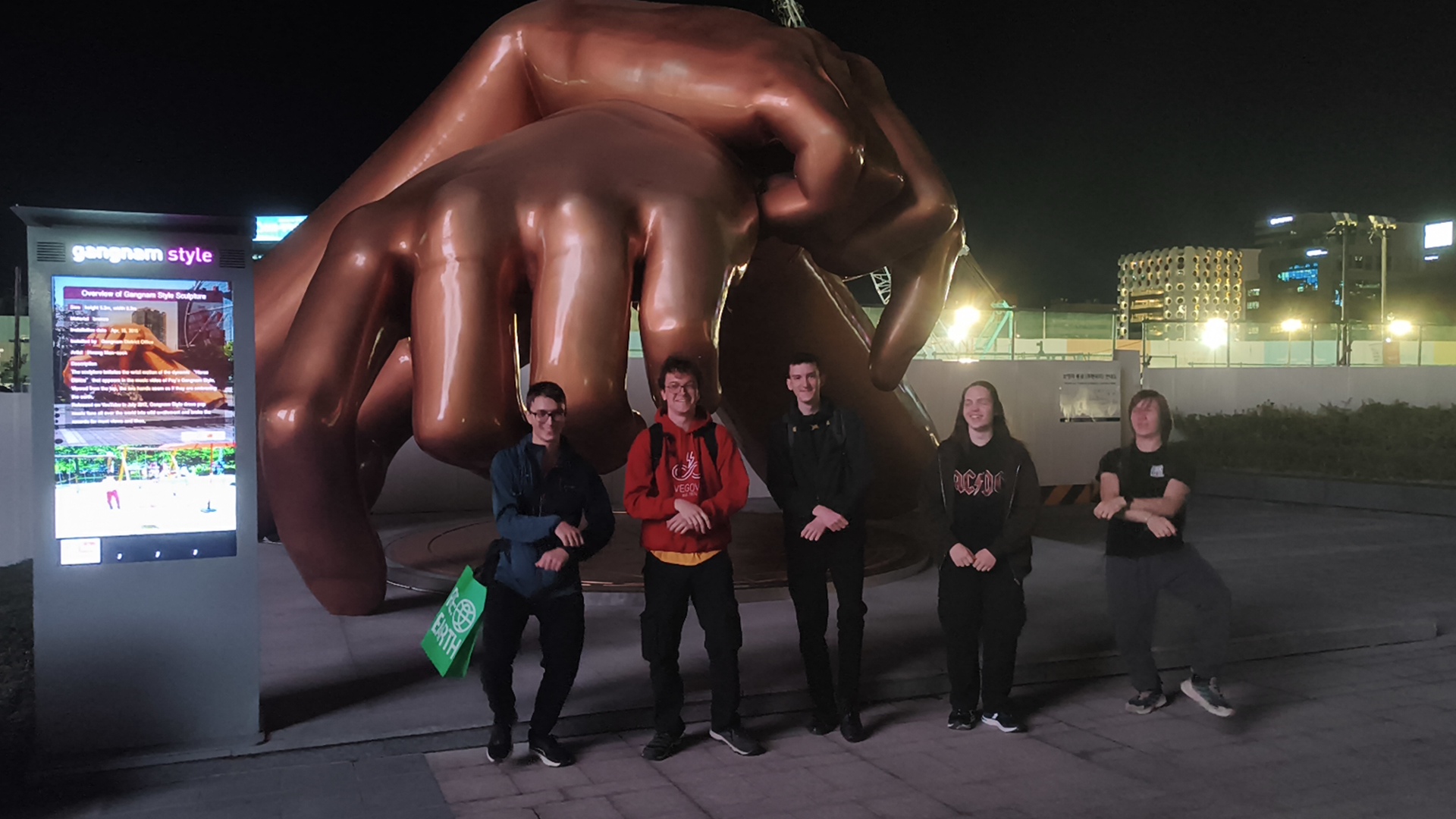
With closing time fast approaching, we found the exit and walked along the main road to the Gangnam Style statue, where they have kindly set up a screen that plays PSY’s once wildly popular song.
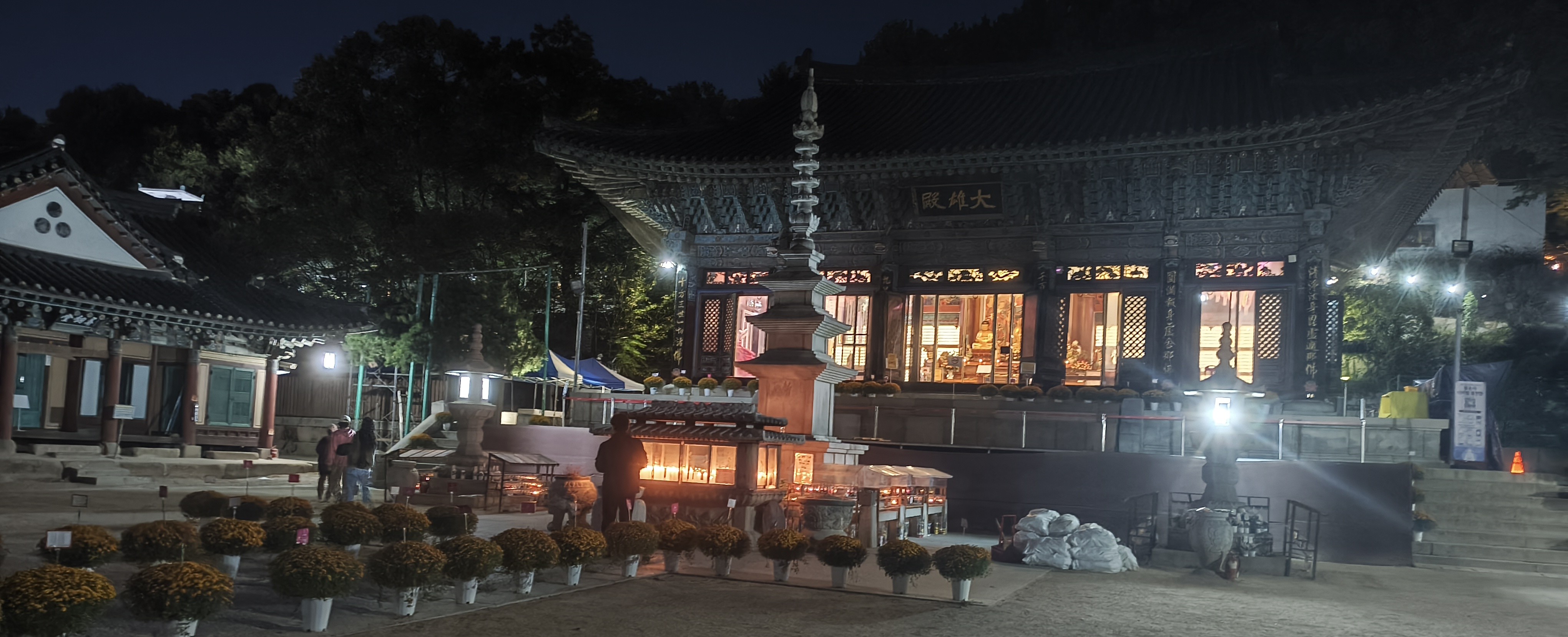
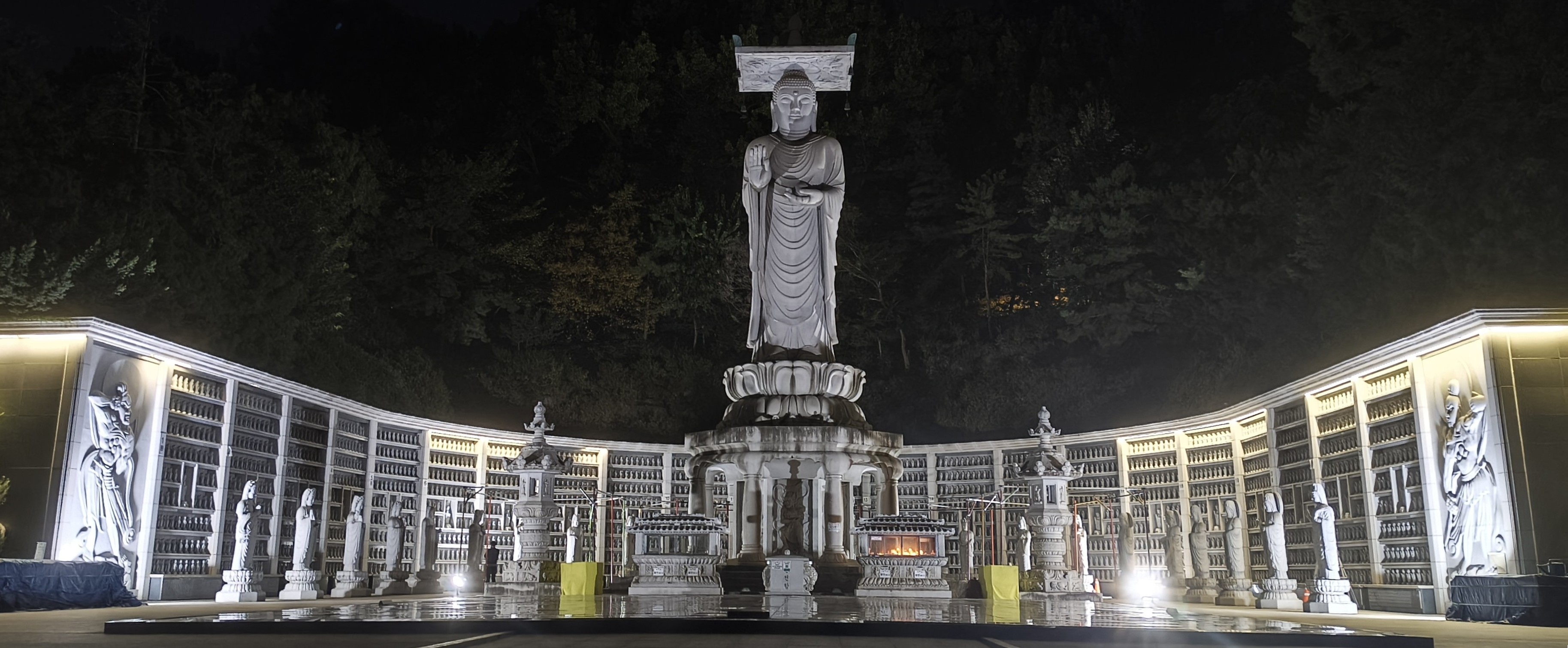
The night was still young, so we made the most of it and also visited Bongeunsa, the Buddhist temple across the road, where we walked uphill in complete silence and took in the sacred site. We got a great deal more than we expected: after passing the prayer halls, we were greeted at the top by a huge, beautifully lit monument.
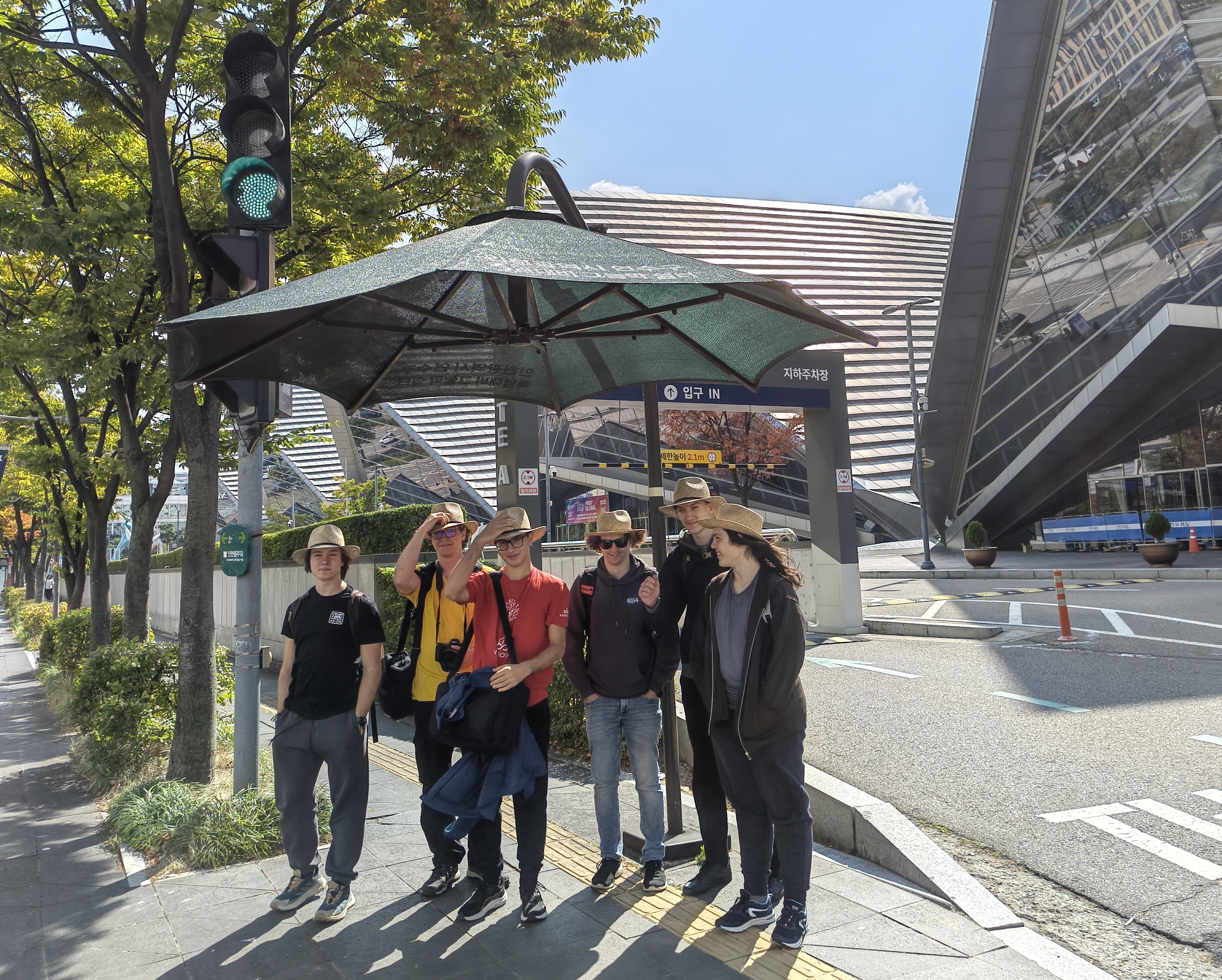
All that remained was to catch the bus back. We settled in comfortably at the right stop, and a few minutes before the bus was due, we spotted one of the first English signs we had seen, saying that the bus would stop on the opposite side of the road. We hurried over, caught the green man and, with about two minutes to spare, settled comfortably onto the bus. This time, we simply showed the driver a translation of ‘five people’, and everything went as it should. Apparently, Koreans show the number five with one hand differently (instead of five outstretched fingers, a closed fist with the thumb sticking out). On the way back, we could feel the difference in comfort between an electric and an ordinary bus.
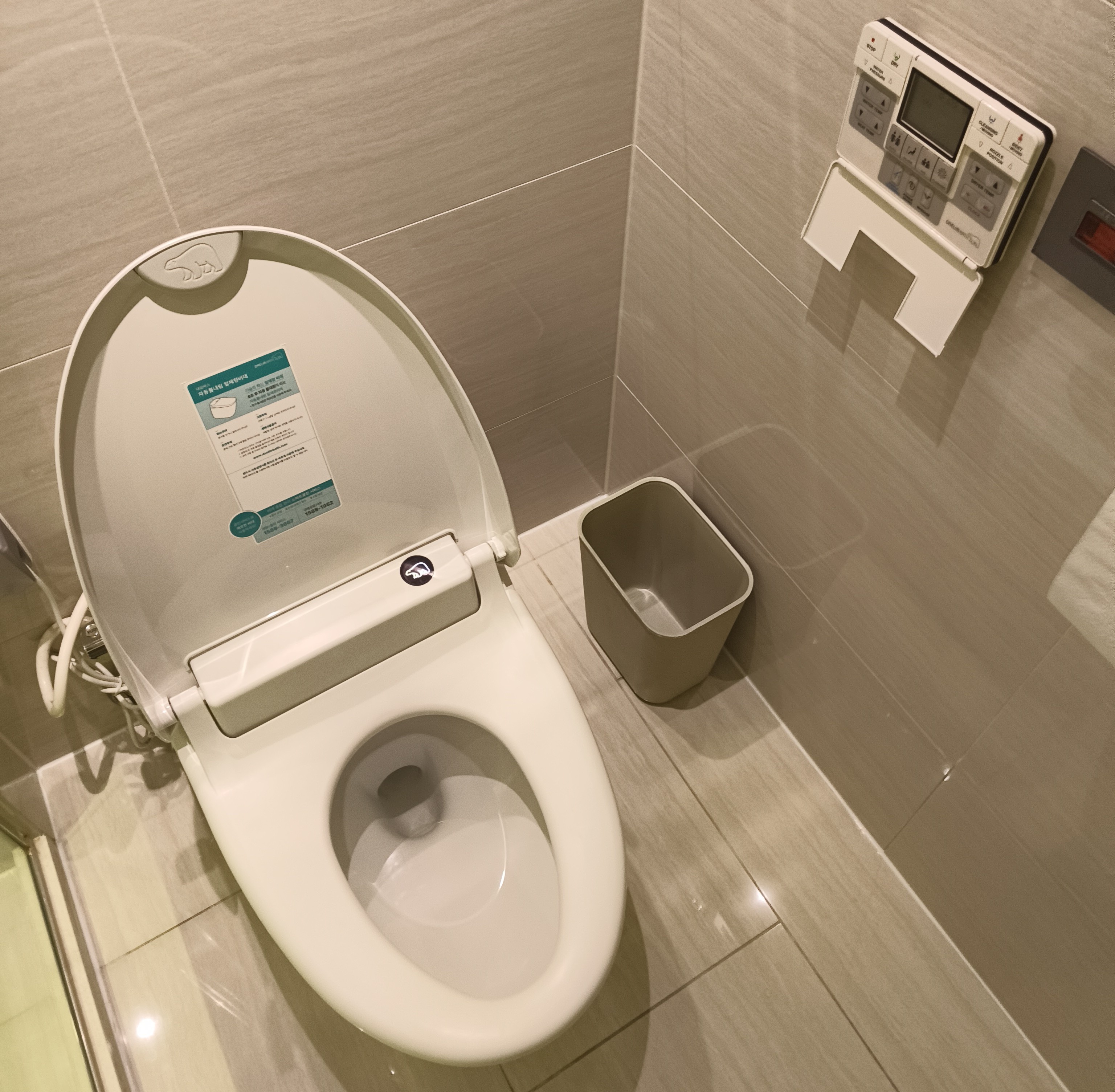
Longing for some rest, we returned to the hotel, unpacked, put the souvenirs we had bought on the shelf and went to bed.
Until next time,
annyeonghi jumuseyo